
Trichloramine (NCl₃) Formation
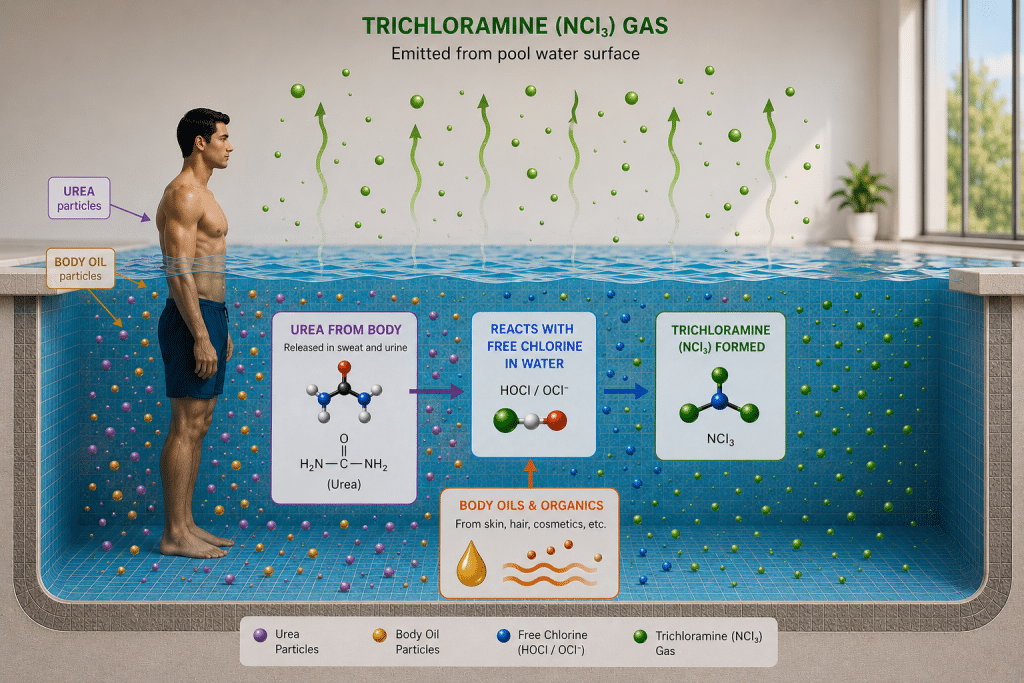
Trichloramine (NCl₃), also referred to as TCA in this report, is generated when free chlorine reacts with nitrogen-containing compounds introduced by bathers, primarily urea from sweat and urine together with body oils and other organics. Once formed, NCl₃ volatilizes from the water surface and accumulates in the air immediately above the pool. Because occupants inhale air near the water surface, ventilation should remove the contaminant before it reaches the breathing zone.
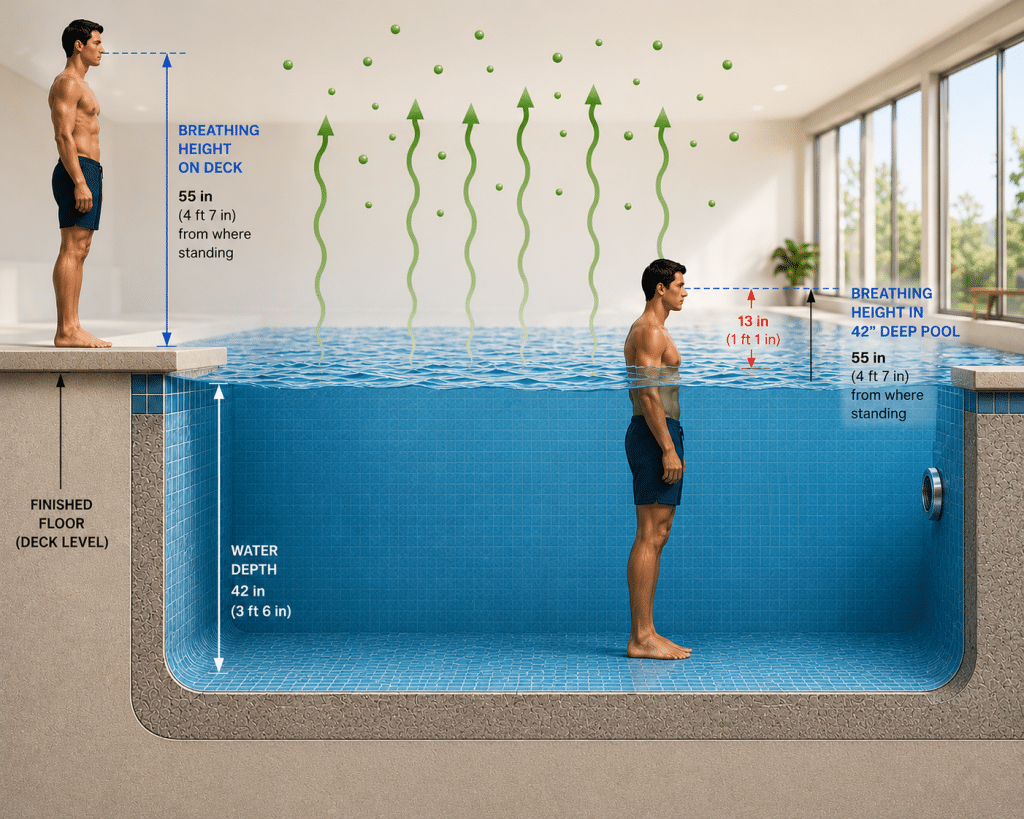
Occupant Breathing Zone
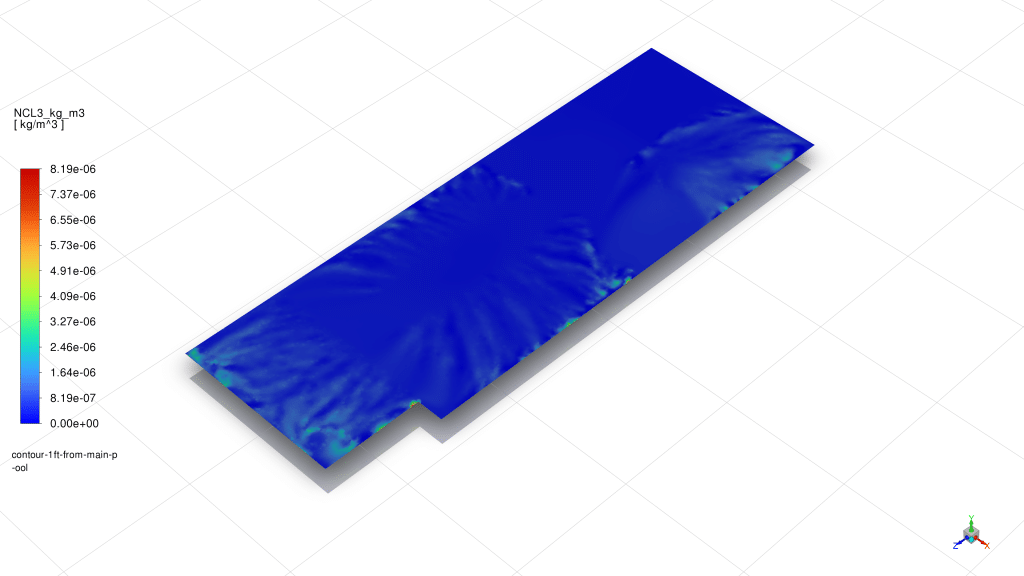
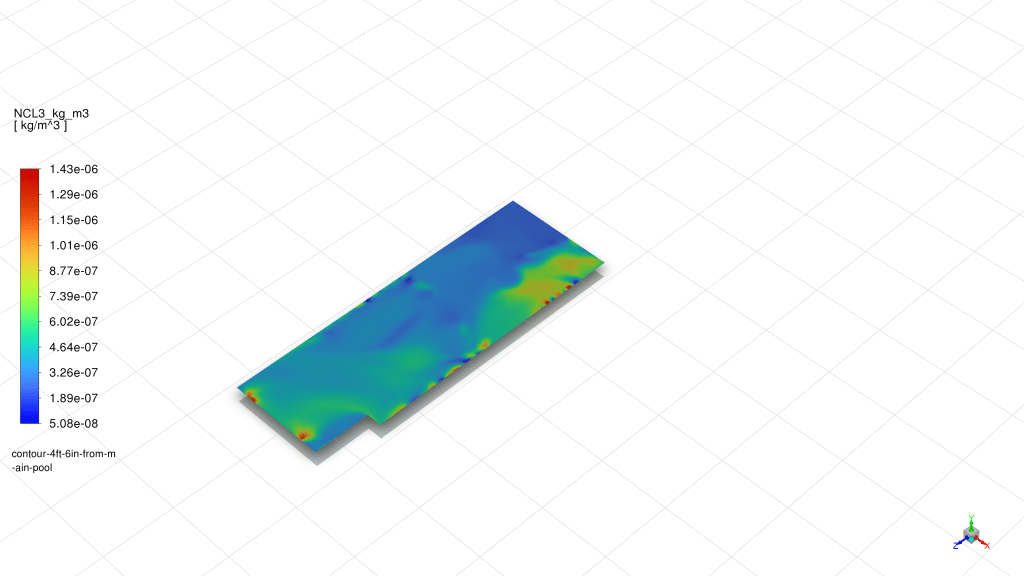
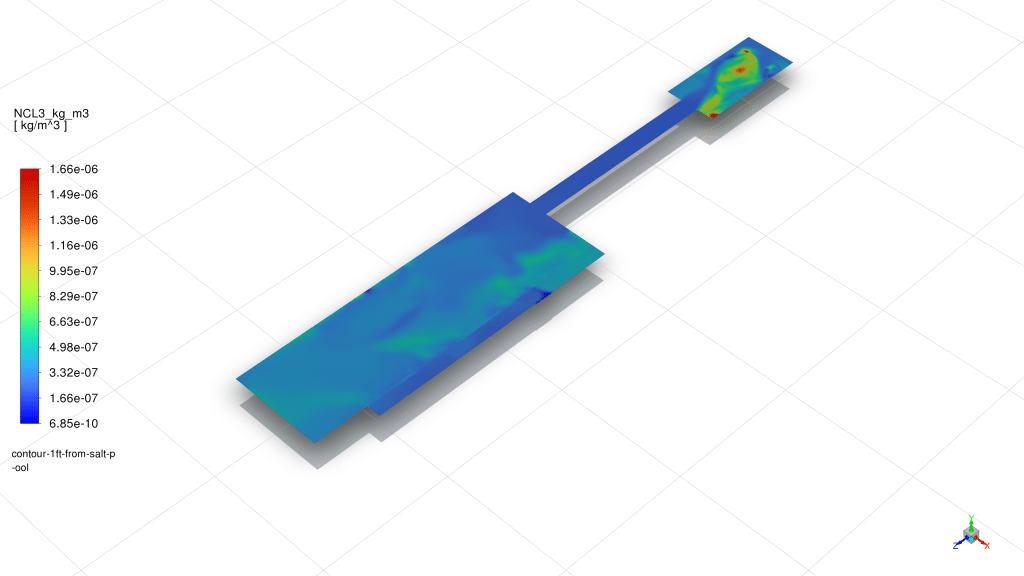
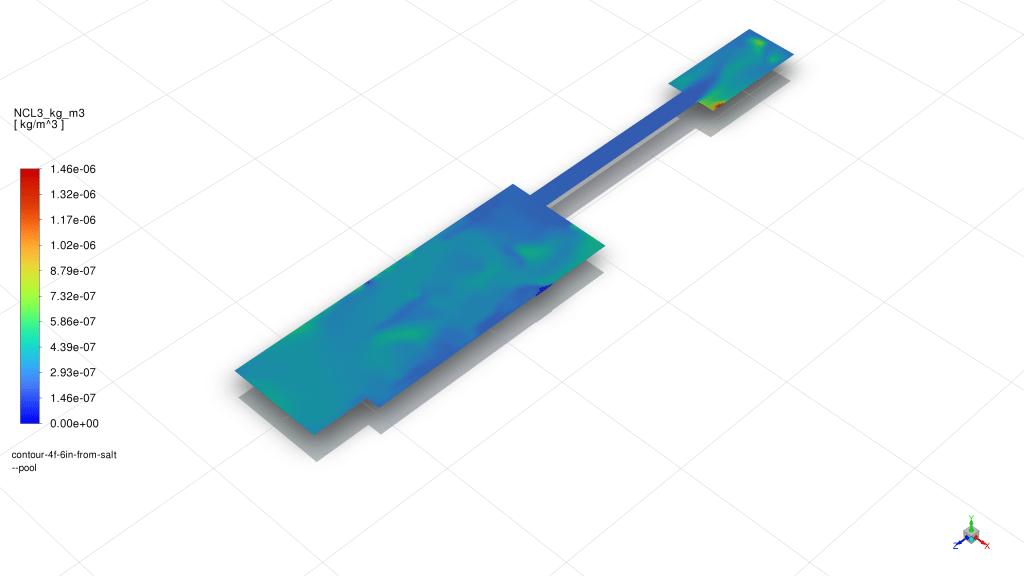
CFD results are evaluated at two elevations:
CFD Model Design & Boundry Condition
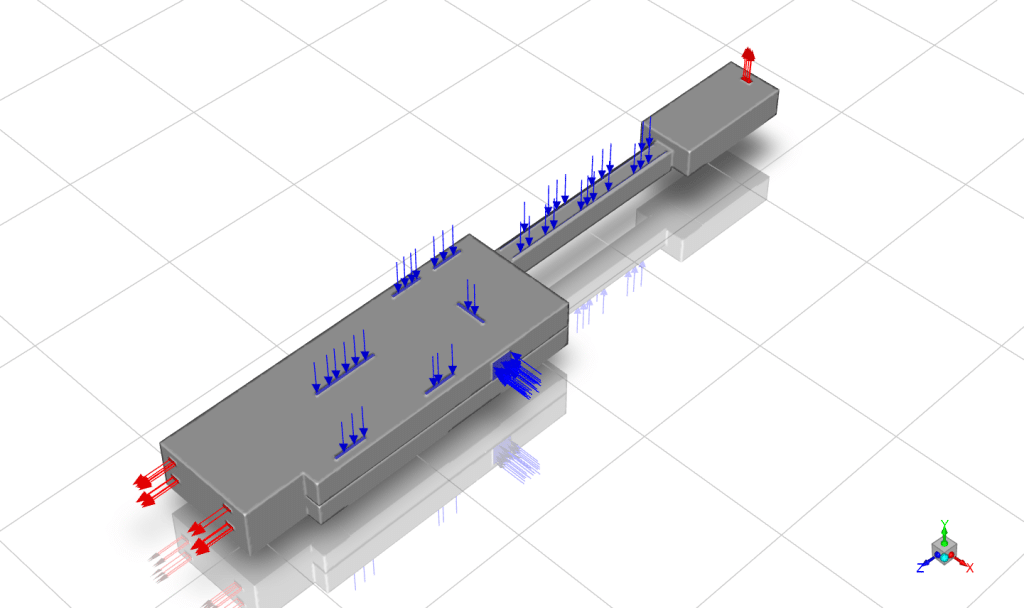
The CFD model includes the main thermal pools, hot pool, salt pool, connecting corridor, supply diffusers, return grilles, and contaminant generation from all pool water surfaces. Species transport was used to model gaseous trichloramine (NCl₃/TCA). A uniform TCA mass flux was applied at the water surfaces to represent continuous emission. Because the HVAC system consists of approximately 10% outdoor air and 90% recirculated air, the supply air was assigned 90% of the calculated room-average TCA concentration to represent contaminant recirculation while the remaining 10% was assumed to be contaminant-free outdoor air. This represents a conservative worst-case operating condition. Supply diffusers, return grilles, exhaust and source capture boundaries used in the CFD model.
Air flow Pattern
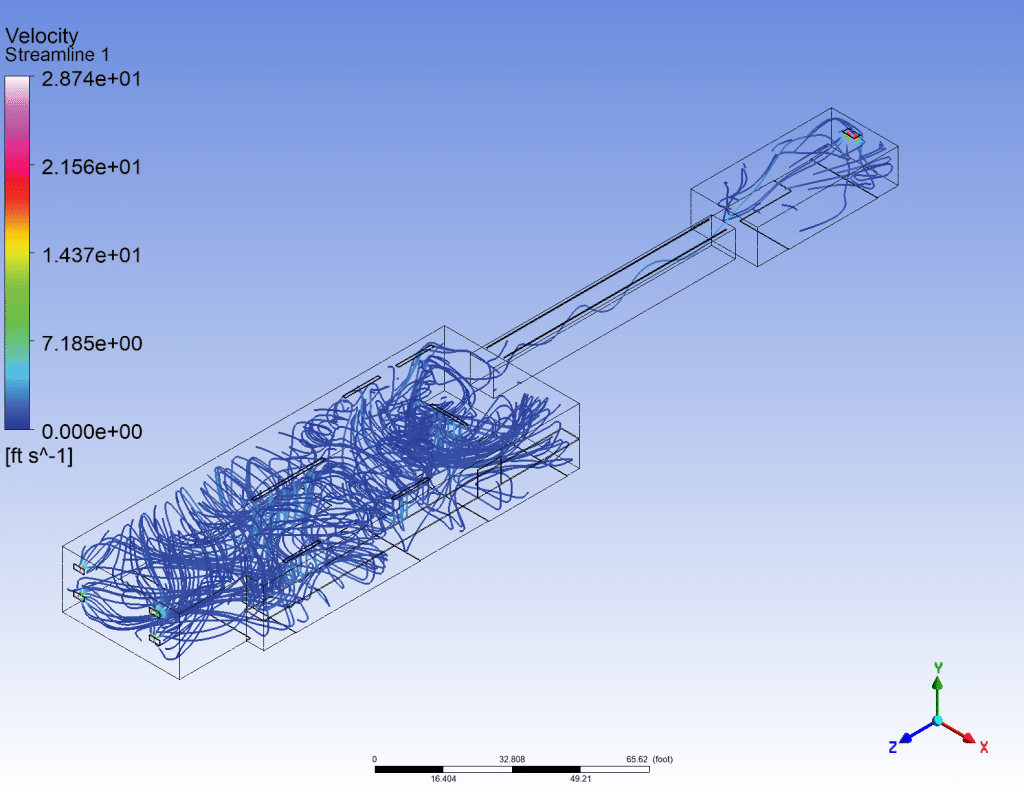
Air streamlines demonstrate room circulation, mixing between spaces, and contaminant transport paths. Recirculation zones near the pool surfaces correspond to locations where localized source capture is most beneficial.
Trichloramine (NCl₃) Concentration Distribution
This section presents the CFD-predicted trichloramine (NCl₃) concentration distribution throughout the natatorium under the baseline ventilation configuration, consisting of the existing general ventilation system without localized source-capture exhaust. The results illustrate NCl₃ concentrations immediately above the pool water surface, within the occupant breathing zone, and through representative vertical sections of the pool areas.
The concentration contours identify areas where trichloramine is generated, transported, diluted, and removed by the ventilation system. The results are presented for both the main pools and the salt pool to evaluate occupant exposure and assess the effectiveness of the existing air distribution system. The sectional views further illustrate the vertical dispersion of NCl₃ from the water surface into the occupied space and identify locations where localized accumulation may occur.
These baseline results provide the reference condition for evaluating the overall ventilation performance and for assessing the potential benefits of adding localized source-capture exhaust to further reduce trichloramine exposure within the natatorium.
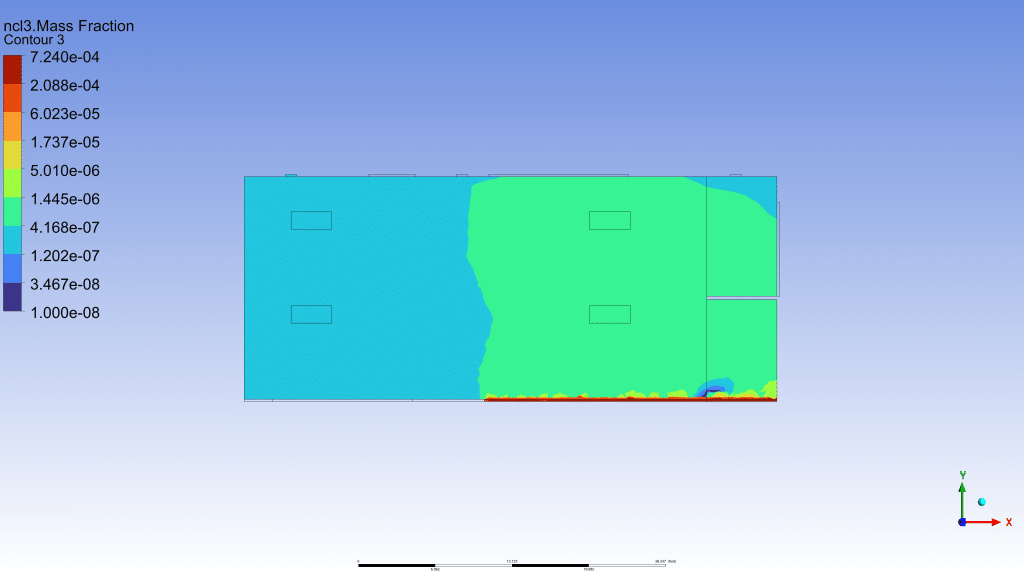
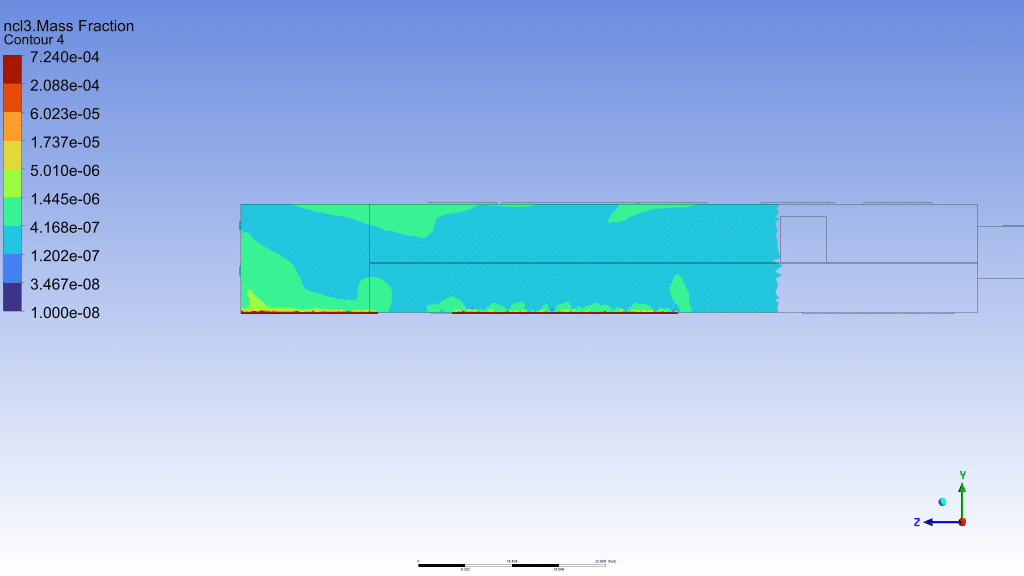
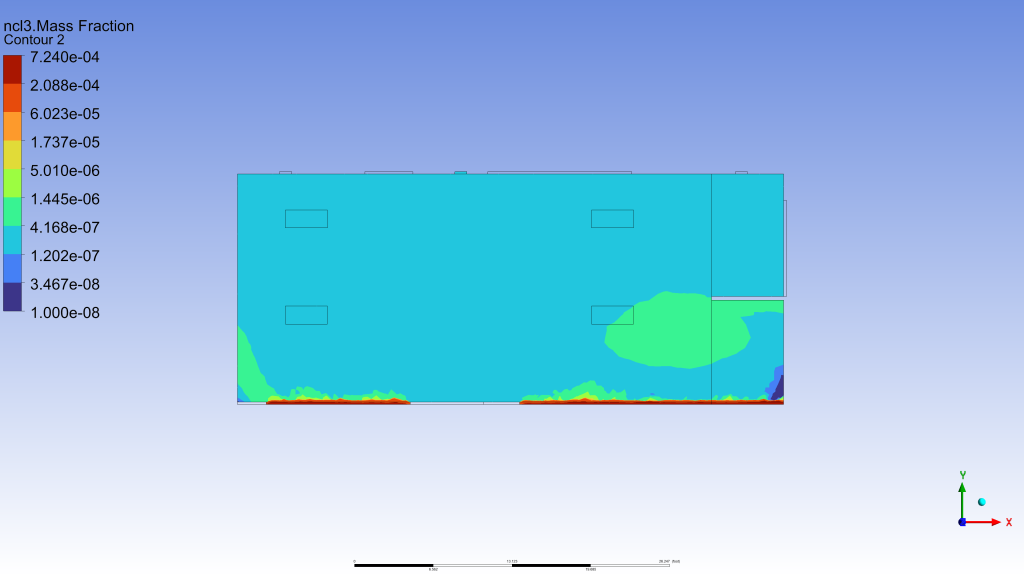
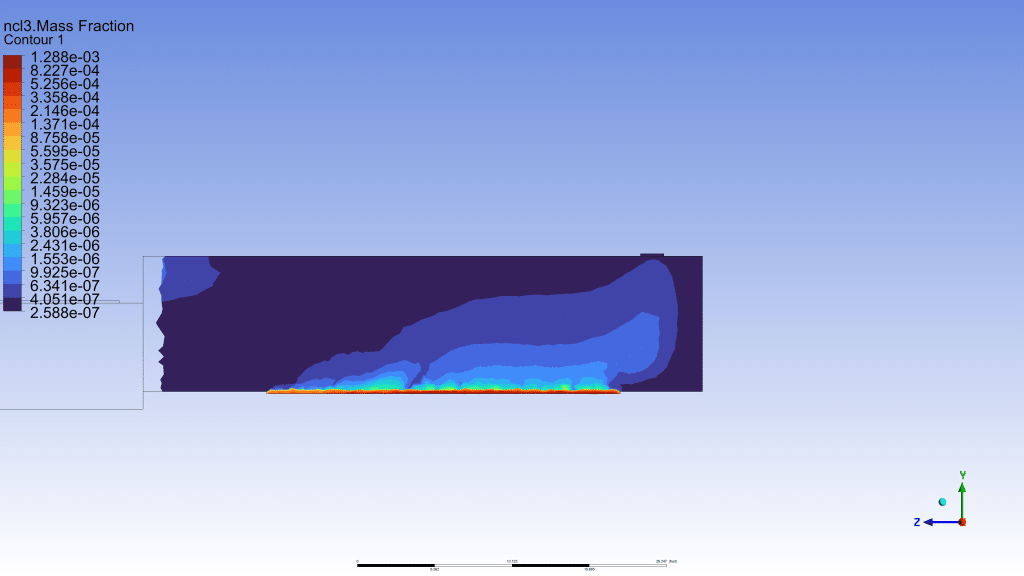
Engineering Evaluation
Recommendation
Maintain the existing general ventilation system and add approximately 1CFM / sqft of water surface of localized source capture distributed above the primary emission areas. Source capture should be positioned close to the water surface to intercept trichloramine before it disperses into the room. After installation, CFD optimization is recommended to finalize grille locations and airflow distribution.
Conclusion
The CFD analysis demonstrates that the proposed HVAC ventilation system provides effective overall air circulation and maintains acceptable trichloramine (NCl₃) concentrations within the occupant breathing zone throughout the natatorium. The results indicate that the general ventilation system is capable of controlling airborne trichloramine exposure for occupants on the pool deck under the modeled operating conditions.
However, localized regions of elevated NCl₃ concentration remain immediately above the pool water surface, particularly within low-velocity and recirculation zones. Although these localized concentrations have limited impact on the general breathing zone, they may affect swimmers and occupants positioned close to the water surface. Therefore, the addition of approximately 1 CFM / SF(Water Surface) of localized source-capture exhaust is recommended to improve air quality directly above the pool surface by removing trichloramine at its source before it disperses into the occupied space. This approach complements the existing HVAC system while providing enhanced air quality for pool users without requiring significant changes to the general ventilation strategy.